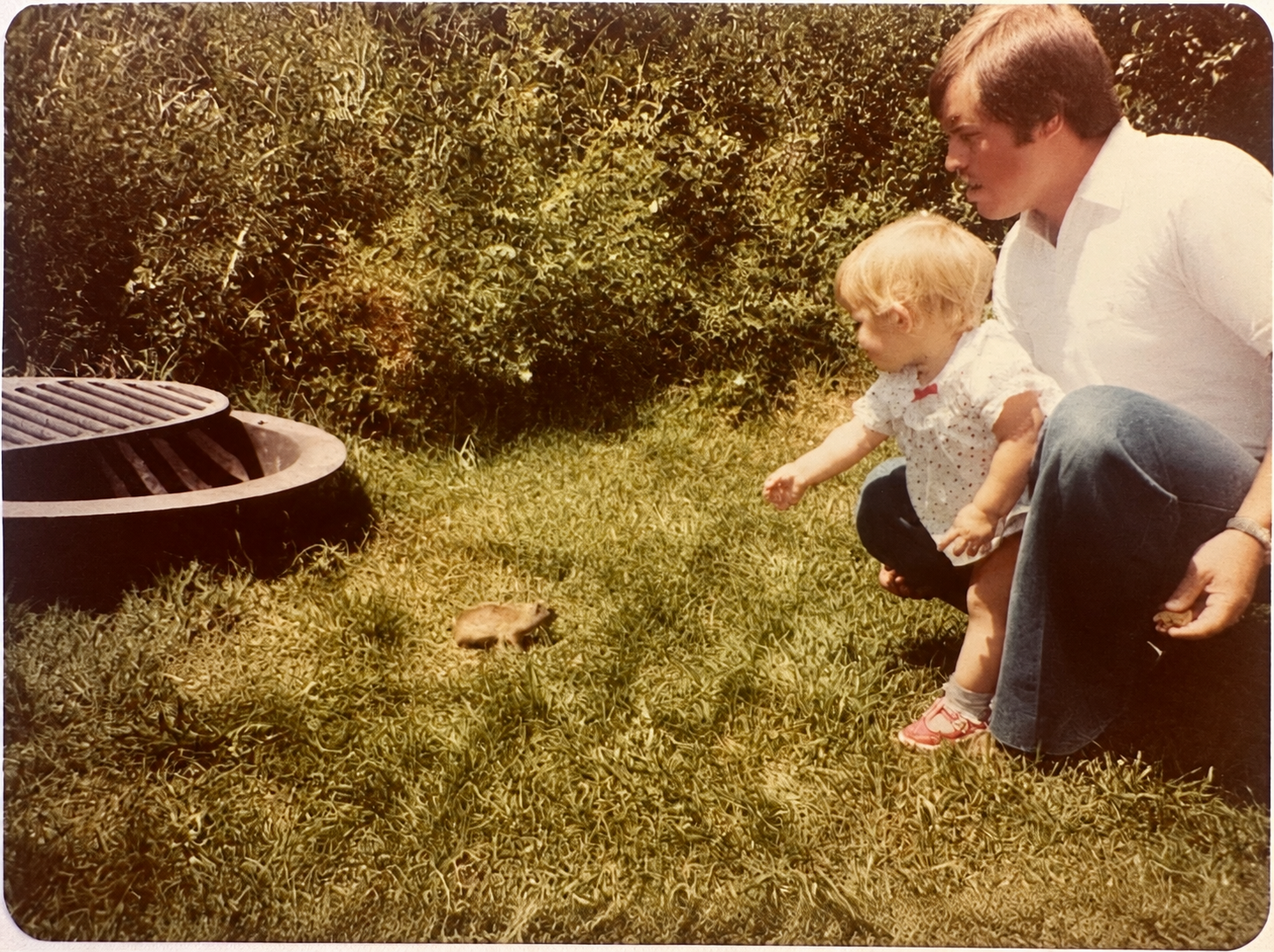
My dad started losing his sight when he was just a boy.
Not all at once, the way you might imagine it. Slowly. The kind of loss that takes decades, and takes them so quietly you can't quite point to the day the world got smaller. Faces becoming shapes. Shapes becoming light. Light becoming memory.
I grew up inside that story. My aunt. My uncle. Eventually my grandparents. Vision loss was not a stranger to my family — it was a language we all, eventually, learned to speak.
What people don't tell you is that it's never really about the eyes. It's about everything sight was quietly holding together. The exact moment a grandchild's face lights up. Driving yourself to church on a Sunday morning. Reading a letter someone wrote just for you. Watching a sunset without needing someone to describe it.
Vision loss doesn't just take sight. It takes participation. It moves someone — slowly, quietly, without ceremony — from the center of the family to the edges of it.
I watched my dad get moved to the edges.
The milestones he experienced through descriptions instead of his own eyes. The moments he was present for but couldn't fully see. The look on a face he'll never know he missed. I don't say this to grieve publicly. I say it because I know I'm not the only one who has watched someone they love disappear into a smaller and smaller world — and felt completely powerless to stop it.
For most of my life, I believed that was simply how the story went. Fixed. Final. Nothing to be done.
And then regeneration rewrote my husband Shaun's story.
Years before Olorin was ever an idea, Shaun walked through a long, brutal season of illness — the kind that takes everything down to the studs and asks you to rebuild from nothing. Through his own regenerative health journey, entirely separate from anything we would later build, he began to come back. What restored him wasn't a single dramatic moment. It was the quiet, remarkable way the body — when it is genuinely supported — remembers how to heal itself.
I watched it happen in our own home. And I could not stop thinking about my dad.
I believe the body was designed — intentionally, beautifully, by our Father in Heaven — to heal. Not always on our timeline. Not always the way we ask. But far more than we are usually given credit for, and far more than we are usually told is possible.
That belief became a question. That question became research. That research became Olorin.
I built this because I kept thinking about what my dad missed. The things I can name and the things I can't. I built this because I don't want that to be someone else's story — not if there is something, anything, that science can offer. I built this because nobody should have to watch someone they love get moved to the edges.
This was never about a product. It was always about a father making eye contact with his daughter. A grandmother watching her grandchildren grow up — in the room, not at the edges of it. A person staying fully, completely present. Not just in body. In sight.
That's what we're building. Not a bottle of drops.
A way back into each other's lives.
— Karianne Klomp
CEO & Co-Founder, Olorin™